
From Water to Workforce: Pharma Insights

Galenisys Newsletter : September 2025
Table of Contents
By Tony Dunford
Editor
-
WELCOME BACK, WE ARE READY TO GET STUCK IN!
Steve Biddulph -
TALES FROM FARAWAY PHARMA
Weird situations crop up even in our industry.
By AUBONNE -
WATER IS SO IMPORTANT IN THE PHARMA INDUSTRY
Like freedom – eternal vigilance is required
By Richard van Duyse -
OBESITY THE WORLDS WEIGHTY CHALLENGE.
Avoiding – maybe - what can genuinely be described as a health and economic catastrophe.
The Editor
WELCOME BACK, WE ARE READY TO GET STUCK IN!

Steve Biddulph
Fellow of Royal Society of Biology. Board level pharma experience. QSM and Aseptic Manufacturing & Control Expertise. Galenisys Managing Director.
Welcome back, if you've just come back from holiday, we hope you had a great time.
And welcome to the September edition of the Galenisys Newsletter.
So far, it’s been a really sunny summer although too hot in some parts of Europe. In the UK I've never eaten so many strawberries. And the hedgerows here are brimming with blackberries. It's a “time of mellow fruitfulness.
We're looking forward to getting our teeth into our new and existing projects. Our clients are keeping us very busy with such items as the construction start of the new manufacturing facility, & in particular the FATs & SATs for its filling and packaging lines.
We are also involved in the risk mitigation for a water system and design of a replacement system. Richard's article in this edition, on the care needed in water production, addresses many of the issues.
Another interesting project we won is assisting a client with regulatory inspection responses and relevant corrective actions, along with the design of a contamination prevention and control programme.
With documentation and audit thrown into the mix, our team will be as very much in “busy as usual” mode, and ready to help you as well.
TALES FROM FARAWAY PHARMA
Weird situations crop up even in our industry.
By AUBONNE
It was a cold October day when I left the UK, but hot antipodean spring when I arrived in Australia (followed by my luggage three days later).
My instructions were to “keep the production show on the road” after our takeover of a local OTC manufacturer. The company had been built up by a couple of retail pharmacists with real entrepreneurial ability to develop formulations. Now these owners wanted to sell out to our Australian subsidiary.
Due diligence had been carried out by my boss - along the lines set out in Steve's article recently – and I had been sent over as interim factory manager to sort out the problems which this due diligence had revealed.
I located the site out on Pacific Highway and noticed on arrival what looked like an excavated swimming pool lined with black tar. It represented the unfinished effluent treatment scheme demanded by the local authority. Once inside the facility, I was introduced to the departmental heads, & foreman etc., and toured the factory & labs. Essentially, activity consisted of bulk formulation followed by filling, packaging, QC, and distribution.
The air of lethargy & expectation about the place combined with the high temperatures, so the day's work started early.
There was an “office” for the factory manager (now me). But when a day later 2 strangers arrived & joined me in there, the amount of space was about the same as a table for three in a Left Bank Bistro. Claustrophobic.
The first guy was the boss of the of our Australian subsidiary, who had not taken the trouble to make my acquaintance for a briefing on arrival. The second was the guy who had founded the company and was selling out. They eyed each other as do opponents at chess.
This was puzzling. Either we’d bought the company or not. Either way, one should know who was in charge. In this and two other subsequent sessions of the “big 3” nothing of value transpired which would help solve the factory problems reported in the production due diligence.
Before setting out, I'd been told that the founders were members of an obscure Christian sect the leader of which had recently decided that pharmaceuticals was a bad thing that his members should have nothing to do with.
Over the following days, it transpired that not only were they pulling out of the business, but that all the department heads & foreman were also members of the sect, and we're leaving too!!
The confrontation between the two guys was in fact a secondary negotiation about how long these key factory people would stay around to aid the transition. Our legal & / or commercial due diligence had clearly not covered this.
Apart from getting the effluent plant completed, the rest of my secondment was largely about recruitment of suitable replacements and their rates of pay in the heavily unionised environment which can be found in Australia.

I well recall that our new warehouse manager, unfamiliar with the products, sent 1000 packs of 12 instead of single pots of cream to Western Australia.
As it took the train a week to get there and a week to get back, we were out of stock of our number one product for more than 2 weeks!
WATER IS SO IMPORTANT IN THE PHARMA INDUSTRY

By Richard van Duyse
Experienced international vaccine industry consultant. Specialized in project & operational management, facility design, start-ups, & technology transfers. Bachelor of Applied Science (B.Sc.).
“Water, water everywhere, and not a drop to drink” was the desperate cry of the “Ancient Mariner”. In this 1st of 2 articles Richard warns “Water, water everywhere, and not a drop to be used without proper preparation”.
In our daily lives, in the developed world at least, we treat water casually, given its ubiquity, abundance, and relatively low cost.
However, in the pharmaceutical industry, water must be continually handled more seriously. Here proper water pretreatment is crucial because water is often a critical ingredient and a contact medium in production processes. The risks arise essentially because it’s a powerful solvent, and essential for microbial life.
Its poor quality can directly lead to product deviations, safety risks, and regulatory non-compliance.
Here are its key uses and the main reasons for the major risks:
- As the raw material “Water for Injection” in injectable products...
• “WFI” must be extremely pure: free of microorganisms, endotoxins, and chemical contaminants.
• Bad pretreatment leaves traces of salts, organic matter, or microbial life, & an unsafe final product. - Its production for cleaning & for other product forms (eg syrups, eyedrops…) needs great care.
• Without proper prefiltration and softening, limescale, iron, or other particles can clog or damage pipes, membranes, and distillation units.
• This leads to higher maintenance costs and production stoppages.
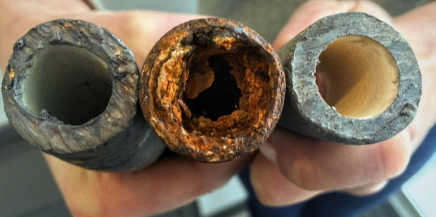
- Preventing Biofilm Formation is essential.
• Organic contaminants and microbial loads in untreated water promote biofilm formation, which is very difficult to remove and constitutes a permanent source of contamination.
• Proper pretreatment (e.g., activated carbon, UV, filtration) significantly reduces this risk. - Consistent Water Quality for Downstream Purification Steps is a pre-requisite.
• Technologies such as reverse osmosis (RO), electro-deionization (EDI), or distillation only perform optimally if the input quality is stable and within specifications.
• Without pretreatment, membranes foul more quickly, their lifespan decreases, and output quality fluctuates (but beware of where bacterial retaining filters are used). - Compliance with Pharmacopoeias and GMP has to be ensured:
• European Pharmacopoeia (Ph. Eur.), USP, and JP impose strict requirements on Purified Water and WFI.
• Inspectors consider not only final quality but also the reliability of the entire water system, including pretreatment. - And correct pretreatment means fewer replacements, fewer flushing cycles, less cleaning and crucially avoiding shutdowns & high operational costs.
Water pretreatment in pharma is not an "optional luxury," but the first barrier against contamination, the foundation for process stability, and a key to GMP compliance.
In the second article for our Newsletter, I’ll look out how we in Galenisys help companies design, engineer, maintain, & ensure the quality of water production systems.
OBESITY THE WORLDS WEIGHTY CHALLENGE
Avoiding what can genuinely be described as a health and economic catastrophe.
The Editor summarises recent warnings.
Wegovy and Mounjaro have been described as the “King Kong” products of the pharma industry, with stunning commercial success for their active ingredients for treating obesity & aiding weight loss.
So, when the ex boss of Novo Nordisk recently stated plainly that drugs alone cannot rollback the tide of obesity & excessive weight you have to sit up and take notice.
The above may sound counterintuitive coming from a pharmaceutical executive, but the reality is that even if every person living with obesity took medicines, we couldn't treat our way out of this crisis.
Citing data from the Lancet Commision on Obesity, and Novo Nordisk’s own research, their ex Boss, Lars Fraud Guard Juergensen points out that:
• More than half of adults and one in three children and adolescents are set to be obese or overweight by 2050 (that’s only 1 generation away).
• The next five years are crucial: in parts of the population, notably children and adolescents, the number of people living with obesity is set to overtake the number who are overweight but not obese!
• The crisis already affects over a billion people worldwide.
• The annual global cost of the obesity alone is forecast to reach $4.3 trillion by 2035. The economic burden posed by other chronic conditions linked to obesity, including diabetes and cardiovascular disease, will also be measured in the trillions.
It didn’t have to be like this. When the British artist Lowry painted in the first half of the 20th century, it was often of people, always thin, walking briskly into the wind on their way home from work, or similar scenes. There were no cars in the paintings.
People were called fat because the condition was so rare, now because of complacency, it exists as normal extended sizes in the clothes racks.
Will obesity help us float when global sea levels rise? How many more wide body jets will be needed? Who will look after all the sick people?
Let’s be clear the challenge cannot only be met in developing medicines and other interventions.
Finding ways to prevent obesity and other chronic diseases before they start is essential.
Let’s repeat that - PREVENTION is imperative!
The world must address the economic and environmental factors that contributed to the obesity epidemic in the first place.
Society needs to wake up to the range of other chronic conditions and numerous comorbidities linked to obesity: cancer, type 2 diabetes, sleep apnoea, liver disease, chronic kidney disease, Alzheimer's; and cardiovascular disease - the biggest cause of death globally. And the costs in the trillions, cannot be met by cash strapped Governments. As the crisis is world-wide public private action in this area must follow with pooled investment and, anonymised data sharing.

Treatment needs to be considered holistically as does PREVENTION. Obesity must be universally recognised and addressed as a multifaceted social responsibility rather than an individual one.
This means restrictions on junk food marketing to children and continued work to reduce the stigma associated with the disease. It also calls for urban planning that supports people's health, for instance by emphasising physical exercise over travelling by car.
Again: the world must prioritise prevention.
Obesity science has come a long way. Appetite regulation and the body's resistance to weight loss are much better understood. Our improved understanding of the hormones regulating glucose levels and appetite reinforces the argument for a holistic approach to interconnected cardiometabolic diseases.
The tools exist; the science & evidence are clear. Now we need to act on our knowledge.
Adapted from the article in The Economist August 16th 2025


