Influence, Illusion & Impact


Galenisys Newsletter : April 2026
Table of Contents
-
GALENISYS NEWS
An update on some of the interesting assignments coming our way -
TALES FROM FARAWAY PHARMA
An update on some of the interesting assignments coming our way -
UNDER THE INFLUENCE
Chinese tea in a special suite
by Steve Biddulph -
THEN AND NOW
By Tony Dunford
Warfare; Healthcare & Welfare -
COMING FOR YOUR BREAKFAST
By Tony Dunford
The health of US pharmaceutical companies is not as good as it looks
GALENISYS NEWS
An update on some of the interesting assignments coming our way

-
We’re delighted to advise that we've been chosen by AXE the well known engineering company to provide support in matters of Quality Assurance and Regulatory Compliance for their future project in the West of France building a solid dose and injectables facility.
-
We've entered into discussions to provide Quality Assurance advice for the proposed biologics facility in Iraq.
-
We're already providing this sort of service for a facility in Angola.
-
And we're awaiting confirmation from Sanofi to start our work carrying out process analytical technology studies at one of their key facilities.
TALES FROM FARAWAY PHARMA

by Steve Biddulph
Fellow of Royal Society of Biology. Board level pharma experience. QSM and Aseptic Manufacturing & Control Expertise. Galenisys Managing Director.
CHINESE TEA IN A SPECIAL SUITE
Here at Galenisys we’ve often stressed the vital importance of onsite audits, whether internal audits, those of contract manufacturers or suppliers, or due diligence audits for partnerships or takeover purposes. We also understand & appreciate for the importance of tea breaks & ceremonies China. However, these 2 different activities need to be appropriately timed as Steve’s article emphasises!!
General auditing travels took my team and I to China. Paul, one of our team, took on the task of auditing a manufacturing site in the southwest close to Tibet. The site manufactured a product for patients who were in malarial comas and close to the end. The Chinese company was in the process of negotiating a contract with our Company to register and market the product for use in Europe. Hence, we had put the site on our agenda for a technical due diligence audit.
However, we had been informed that questions had been raised by local regulatory authorities (NMPA) about aseptic techniques on the site.
Here are a selection of the extraordinary Observations in Paul’s report, on the aseptic filling area operations:
- He was surprised to see spittoons in the corners of all rooms in the clean and aseptic filling areas
- Cleaning staff who entered the above facilities directly from the outside with no protective clothing and armed with their equipment, trolleys, sponges and buckets.
- Then the cleaning staff entered the aseptic filling area with batch filling in progress to our auditor’s astonishment!
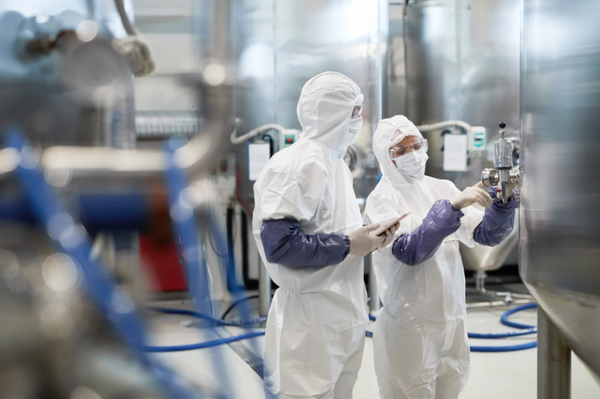
- Fitters were next on the scene in the aseptic area with no preparation whatsoever They then climbed over the filling machine, while it was in operation, to fix curtains and HEPA filter grills, to complete the demolition of GMP aseptic filling area operating procedures – except that concerning food & drink - however:
- Operators left the aseptic area to the changing rooms for a refreshing cup of tea and a biscuit before simply walking back into the area.
- The area supervisor (correctly dressed for the clean rooms) enquired whether he could serve a cup of tea to Paul still in the suite, observing the activities around him!
Paul’s final report had more observations than the last 100 worst audits that we had ever recorded.
Site management’s responses at the exit interview majored on:
- Absence of contamination risk in their estimation
- Not wishing to interfere with a “robust well-run process”.
- A product that had never had a failed batch (however there were some interesting investigations that always showed that deviations had no impact!).
- Allowing people to be comfortable in their work (tea and biscuits)
The rest of Paul’s observations were met with replies in the same vein

On the morning of his departure, Paul sent out the following e-mail:
“As you know guys, I have been all over the world and have eaten everything that local people served me. Here in China, I have met my match, at last. It was at breakfast where I found something that even I could not eat.
Obviously, it was not the tea and croissant nor was it the red shelled eggs to the left of my plate nor the black ones behind it. It was the eggs to the right of my plate with two feet sticking out of the top, and watching the locals pulling the well-developed chick embryos out, gobbling them down and smacking their lips”.
UNDER THE INFLUENCE
by Tony Dunford
This week a pack of yoghurt was on our shopping list. In the supermarket both the vanilla and the blueberry varieties were “on special”. I hesitated for a while and then chose blueberry probably because I remembered that blueberries include something that's good for us. The antioxidant apparently.
I must have been influenced by some article or blurb. Was it the summary of a serious scientific paper or was it a plug on the Internet?
In our February Newsletter Hannah Westwood highlighted that for her Generation Z, the #1 choice for advice on how to look after health and well-being is the internet and social media. There a continuing stream of pop-up ads can be good, bad, and expensive.
Articles highlight the benefits of peptides, or fibre, or protein, or melatonin, … and blueberries don't get a look in.
The hormone melatonin is well known for regulating the bodies biological clock. It’s led to all sorts of melatonin formulations for intercontinental travellers to combat jetlag. The body can't adjust its melatonin production as fast as the jets can fly. Your clock and melatonin can take days to catch up.
Some scientific data shows melatonin can be beneficial. It’s best taken after you're going eastwards the rather than westwards since it rather speeds up your clock rather than slowing it down.
Musclebound bodybuilders pumping iron on YouTube videos regularly touting proteins. (Admittedly they’re much better than the performance enhancing anabolic steroids used by Soviet athletes and dodgy types in back street gyms years ago.)
Social media apps are full of articles and discussion about the pros and cons of these of a whole range of peptides. Dubious websites offer a peptide drug known as BPC 157 for “it’s rejuvenating powers” and also sold with TB- 500 another untested chemical. Recently even John F Kennedy Jnr controversial head of US healthcare appeared on Joe Regan’s podcast -the world's most popular influencer, announcing he intends to allow 14 peptides to be prepared by licenced compounding pharmacies.
Much of the noise results from the word peptide since the phenomenal success of Glucagon -like Peptide drugs (GLP1 drugs) for diabetes & weight loss; together with users’ belief and hope that it's much better to optimise well-being or function rather than treat later illnesses with classical drugs.
Sadly claims, which exploit loopholes in health regulation, for various peptides (many for injection) are popping up all over the net, eg for hair loss, improved memory, libido boost, stopping excess muscles growth, or boosting repair mechanisms. In September the European Medicines Agency issued a public warning about the grey market GLP-1 drugs because of impurities, side effects and dangerous interactions.
It's a sign of the times too that everybody's talking at once. Trump never seems to stop, probably even in his sleep, (I hope Melania’s found a peptide for insomnia).
But currently in terms of noise, peptides are in competition with FIBRE!! as influencers on TikTok eulogise “fibremaxxing”. The formulation folk in the processed food industry have quickly jumped on this to add the stuff to frozen pizzas, soft drinks and no doubt yoghurt. (However this added protein can often be synthetic or cellulose extracted from wood or cotton).
Numerous scientific studies have shown that the fibre which is found in in plants is good for you. During digestion it regulates the amount of sugar and fat in stopping too much of those bad things being absorbed by the body. It also helps get rid of harmful stuff like cholesterol into our waste, and also improves the health of the colon.

So, duck under the influencers, & you could get this cheaply anyway. Just eat plenty of whole wheat bread, and “five (or more) a day portions of fruit and vegetables (around 400 grammes).
You'll get all the fibre you need without listening to those siren voices.
THEN AND NOW
The Editor
Warfare; Healthcare & Welfare
The highly successful “Warrior Chronicles” books describe in fictional detail the military struggles between Saxon England and invading Norseman and Danes in the 9th and 10th centuries.
The scenarios that are described are related to many actual battles in known locations, involving historical English kings, and warlords of the period. They accurately represent warfare and its effects on the health and welfare of the populations.
Compared with the wars going on currently in the Middle East the nature of Warfare and the effects on Health are staggeringly different.

THEN it was generally sufficient to have more trained warriors than the enemy in order to win a battle. Surprise was possible. Warriors faced each other a swords length apart. It was vicious & personal, and the Leaders had “Skin in the Game” physically & metaphorically.
The aftermath was short term - looting slaughter & enslavement, but fairly localised. Ever present hunger & famine would worsen in the area. But other regions might hear much later of widely different accounts.
The wounded often died from infection; or were permanently disabled. Healthcare consisted of staunching bleeding, herbs, prayers, & superstition.

And NOW
Anyone within 2000miles might be killed. Devastation is indiscriminate & huge

The combatants rarely see each other. Some will return home from the drone screens in the office in time to see their kids at supper.
Folks worldwide suffer relatively minor inconvenience & some shortages, immune from the digital deaths.
Only HEATHCARE & WELFARE are better. Some injured can, fortunately, get fabulous medical attention and survival rates are far higher.
It’s good to be involved, as we in Galenisys are, in HEATHCARE & WELFARE - on the positive side - and not the other stuff.
COMING FOR YOUR BREAKFAST
By Tony Dunford
The health of US pharmaceutical companies is not as good as it looks
During the last few years the remarkable success of GLP-1 drugs and the effect it's had on the fortunes of Novo Nordisk, Eli Lilly & others have tended obscure some dark clouds.
The difficulties facing the industry in North America are several. Analysts point to rising tariffs, expiring patents, falling returns on R&D, and political pressures in particular.
Donald trump's attitude towards health care & misguided measures to cut high US costs, together with his science sceptical administration, & a US Secretary of Health controversial for his anti-vaccine stance, makes long term US investing in R&D much less attractive than alternatives.
The results are showing up in the financial figures typified by US index funds & ETFs:
Over 1, 3, & 5 years the whole S&P index has risen by 14.9% 55.7%, & 81.9%; whereas an ETF tracking the S&P 500 healthcare companies has risen by only 1.9% 11.5% and 40.7% over these periods (figures to the 2nd April 2026). Admittedly healthcare is viewed as a defensive sector however this alone does not explain the difference.
Next is the challenge coming from China which is shaking off the adverse publicity surrounding COVID-19 and the poor historical GMP record of its’ companies. Its life sciences sector (which comprises big pharma companies, biotechs, healthcare equipment makers and suppliers) now has some 550 listed companies with capitalisations > US$200 million.
Notable Chinese names are MicroPort for robotic surgery, and United Imaging for medical scanners, together with several others in drug development where their research efforts appear to be providing a better return on capital than those in the USA. Recently Chinese developers accounted for 32% of global drug licencing deals by value according to an investment bank. The figure was 3% between 2011 and 2021.
And what they're turning out is attractive. Novartis agreed to pay Argo Biopharma up to $5.2 bn for therapy rights, and Pfizer struck a similar deal with another Chinese firm £SBio for a cancer drug. China is now said to account for 1/3 of innovative drug candidates under development globally, & was responsible for 1/2 of new molecules entering trials, compared to less than 20% a decade ago.
The winning formula seems to be:
- the Chinese state backing academic researchers with generous grants.
- these scientists are free to spin off their work into startups
- plenty of money is available from venture capitalists to back these efforts
- this provokes notable interest for deals both from big local pharmaceutical companies as well as foreign ones.
In this respect China has copied the traditional US health industrial complex which is now under threat from the current administration with cuts to U.S. Federal research funding.
As a result the Chinese sectors’ total market capitalization is now some $1.2 trillion, a rise of nearly 50% in a year, compared with a rise of 10% for the 450 US companies in the sector.